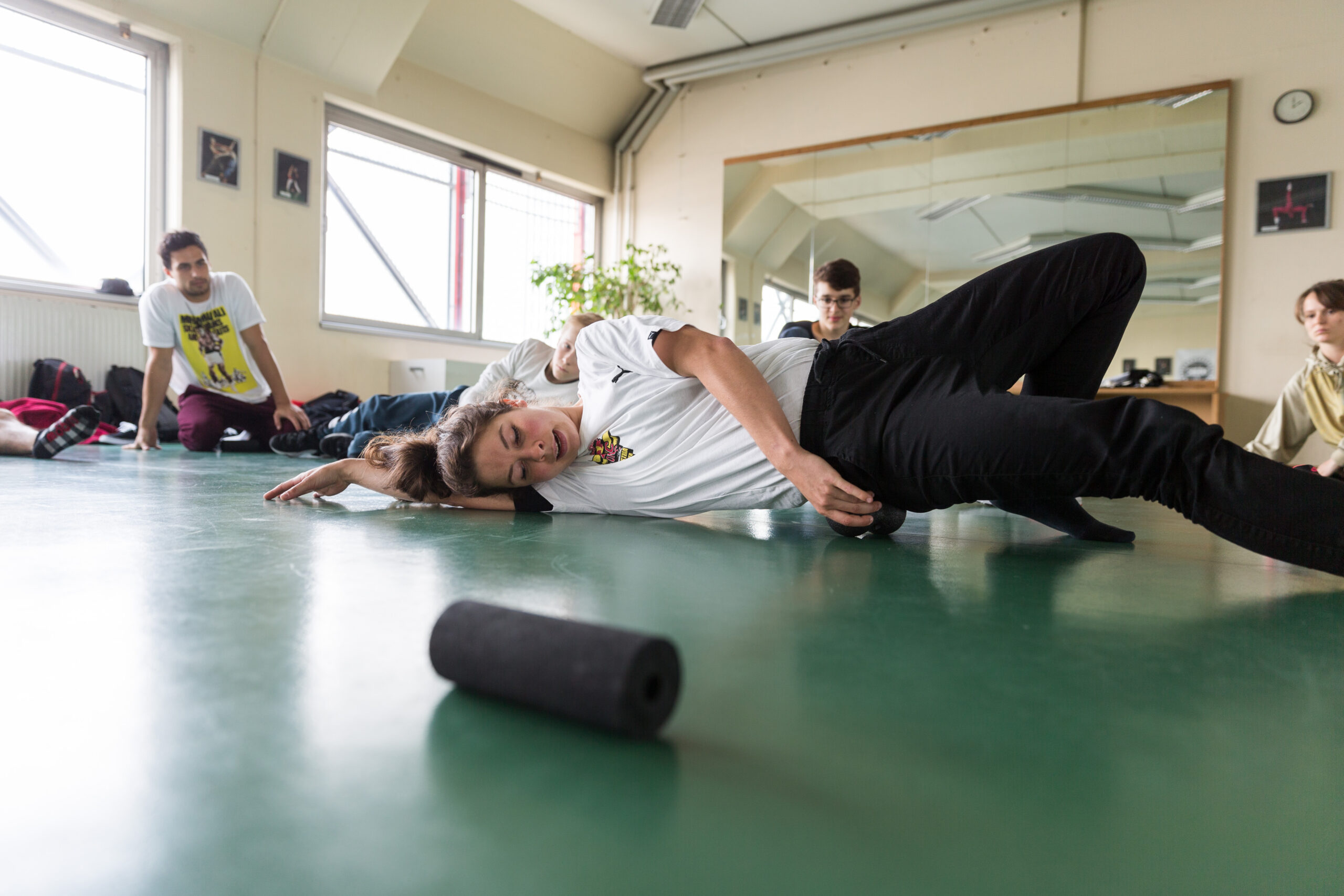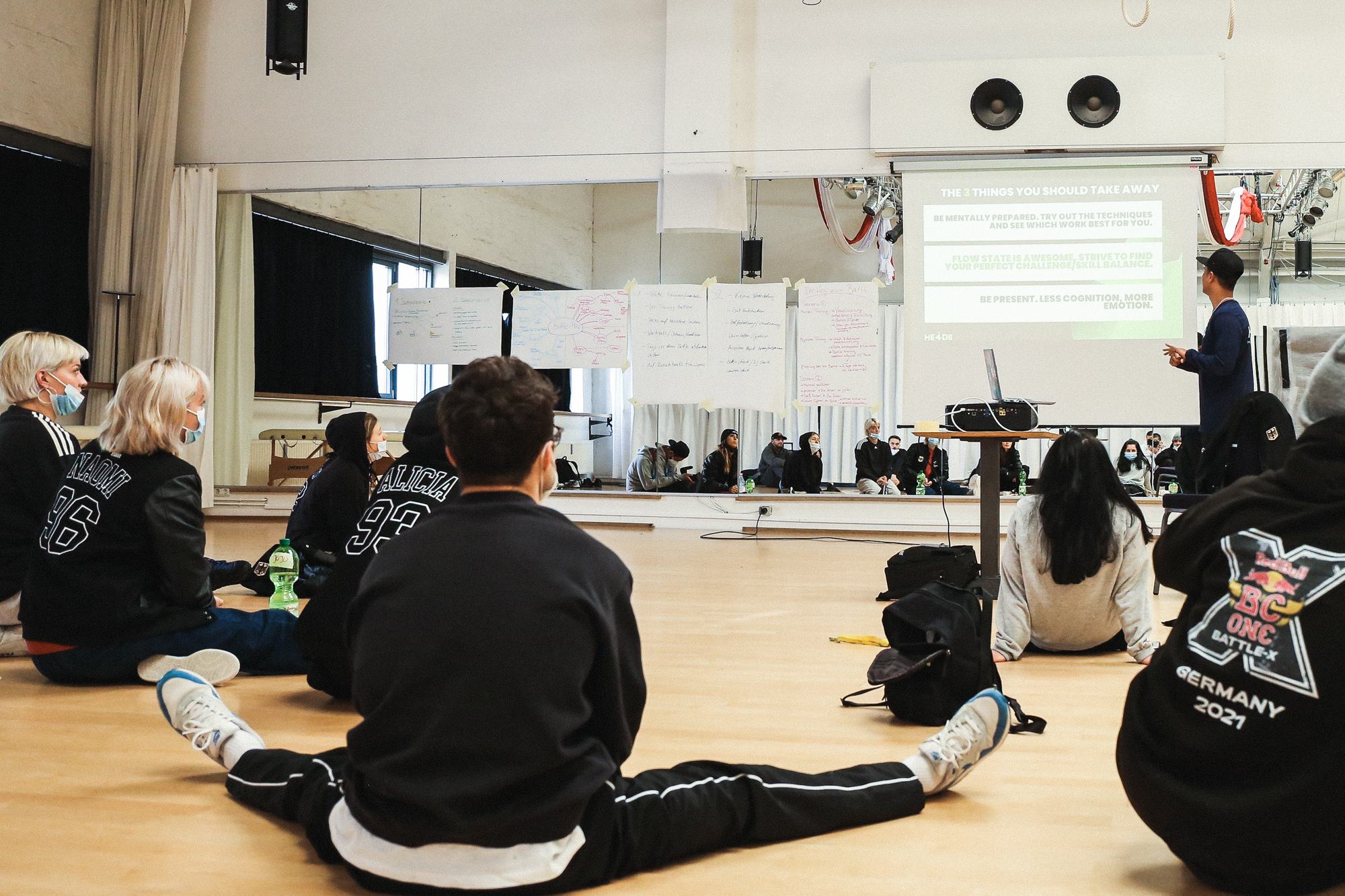
In the dance industry and in street dance culture, stopping is rarely an option. However, pushing through pain is almost a badge of honor. Battles don’t wait, cyphers don’t pause, and shows don’t reschedule just because your knee feels “a bit off”. Tours keep moving, rehearsals continue, no matter how your body feels. Whether you’re on stage, in a studio, or on the road, dancers across all styles operate under constant performance pressure. And while dance is often seen as art, the physical demands behind it follow the same rules as high-performance sport. Ignoring those rules doesn’t make injuries disappear, it only delays the consequences. Here’s the hard truth: Taking injuries lightly doesn’t make you tough, it makes you unavailable in the long run.
As dancers, we operate in a space between art and high-performance sport. Yet when it comes to injuries, many of us are still stuck in outdated ideas, half-knowledge, or pure improvisation. This article breaks down how injuries actually work, what you should really do when something happens, and how the HE4DS approach helps dancers stay in the game, not just survive it.

Article by HE4DS expert André Nguyen aka The Boogie Doctor
Dance Is Not a Game, But Injuries Are Real
Research consistently shows that hip hop and street dance have a significantly higher injury rate than many other dance styles, with knees, ankles, feet and the lower back being most affected. Why?
Because dancers:
-
train and perform year-round
-
rarely have medical staff on site
-
often delay seeing a doctor or physio
-
tend to self-diagnose (or ignore symptoms entirely)
At HE4DS, we see the consequences every day: minor issues turning chronic, preventable injuries becoming career-limiting factors.
First Things First: What Kind of Injury Is It?
Not every injury is the same and treating them all alike is one of the biggest mistakes dancers make.
Common injury types in street dance:
-
Sprains – ligaments overstretched or torn (classic ankle twist)
-
Strains – muscle or tendon overload or tear
-
Contusions (bruises) – direct impact, often underestimated
-
Tendinopathies – overload injuries like jumper’s knee
-
Concussions – rare, yet still dangerously underestimated in dance
-
Fractures – rare, but often missed initially
Understanding what happened is more important than asking “Can I still dance?”
The Healing Timeline Nobody Respects
One of the most eye-opening topics in dancer education is tissue healing. Your body doesn’t care about your next battle.
Healing happens in phases:
-
Inflammation (0–3 days)
Pain, swelling, reduced function -
Rebuilding (up to 3 weeks)
Tissue repairs itself, but is still fragile -
Remodeling (6 weeks to several months)
Strength and resilience return gradually
Tendons, for example, may feel fine after a few weeks, while still being up to 30% weaker than before. This is where most re-injuries happen.
PEACE & LOVE: First Aid That Actually Makes Sense
Forget the old “just rest and ice forever” mindset. The modern evidence-based approach is PEACE & LOVE:
Immediately after injury — PEACE
-
Protect: stop aggravating movements
-
Elevate if needed
-
Avoid anti-inflammatories that disturb healing
-
Compress when appropriate
-
Educate instead of panicking
After the first days — LOVE
-
Load gradually
-
Optimism matters (mental state influences recovery)
-
Vascularisation through controlled movement
-
Exercise specific to the tissue and dance demands
This aligns perfectly with the HE4DS philosophy: early, smart movement, not blind rest.
Red Flags: When Dancing Is NOT an Option
As dancers, we are trained to tolerate discomfort, but there is a clear line between functional pain and warning signals that should never be ignored. If you suddenly can’t walk properly, experience severe pain (subjectively perceived above 6 out of 10), numbness, visible deformities, or any form of loss of consciousness, continuing to dance is no longer an option. These red flags indicate potential serious injury and require immediate medical evaluation. Recognizing them early can be the difference between proper recovery and long-term damage. At HE4DS, we strongly emphasize learning to recognize these signs early, because smart decision-making in the moment can determine whether an injury heals properly or turns into a chronic problem.
Stop immediately and seek medical help if:
-
you can’t walk properly
-
pain is intense (VAS > 6)
-
there is loss of sensation
-
the limb looks deformed
-
there was loss of consciousness
Dancing through these signs is not “mental strength”. It’s negligence.
Why Ankle Sprains Keep Coming Back
Ankle sprains are by far the most common traumatic injury in street and stage dance and also one of the most frequently underestimated. A quick twist during a landing or directional change can overstretch or tear the ankle ligaments, often without dramatic symptoms at first. Many dancers return to training as soon as the pain fades, skipping the rehabilitation process. Without targeted training that respects the phases of wound healing and progressively rebuilds stability and control, the ankle remains vulnerable. This increases the risk of recurrent sprains and compensation patterns that travel up the kinetic chain to the knee, hip, or lower back.
A proper rehabilitation through structured exercising after an ankle sprain should be mandatory, not optional. From a performance perspective, this is not downtime, it’s an investment in long-term availability.
Ankle sprains are the most common traumatic injury in street dance and also the most poorly rehabilitated.
Once you’ve had one sprain:
-
your risk of re-injury increases massively
-
balance and proprioception are impaired
-
compensation patterns start creeping in
Physiotherapy after an ankle sprain should be mandatory, not optional. Otherwise, the problem just moves up the chain: knee, hip, back.
The HE4DS Perspective: Ask Better Questions
At HE4DS, we don’t start with exercises.
We start with questions:
-
Can you walk without compensation?
-
Does pain disappear with rest or always come back?
-
Is the problem acute or chronic?
-
What movement pattern caused it?
This mindset is embedded in our our coaching work. Because without understanding the why, treatment becomes guesswork.
Take-Home Messages for Dancers
-
Pain is information, not an enemy
-
Early smart action prevents long-term damage
-
Healing timelines are non-negotiable
-
Rehab is part of training — not a break from it
-
Asking for help is a performance strategy
If you want to dance longer, stronger, and with more freedom, learn how your body actually heals.
Because real longevity isn’t about pushing harder.
It’s about training — and recovering — smarter.
Want to go deeper into injury prevention, screening, and high-performance dance training?
Check out the HE4DS Education Program 2026!