Breaking has officially entered the world of elite sport. Olympic inclusion, national squads, performance pressure, international calendars. But one key question remains largely unanswered: how do professional breakers actually train?
Until recently, most assumptions were based on scene knowledge, anecdotal evidence and personal experience. Now, for the first time, a detailed scientific analysis gives us a clear picture of what high-level breaking training really looks like and where its structural limits still are.
The HE4DS team colaborated with the German Sports University and the University of Stuttgart and conducted a in-field study to analyse the training practices within professional breakers.

Article by HE4DS expert Sophie Manuela Lindner
Want to go deeper into high-performance dance training?
Check out the HE4DS Education Program 2026!
Who Are We Talking About?
The study looked at professional breakers from national squads across several countries. The picture that emerges challenges a few common stereotypes.
These athletes are not teenagers. On average, they are around 30 years old, with more than 15 years of breaking experience. Half of them live off breaking, while the other half still juggle full-time jobs alongside elite-level training. That alone already tells us something important: performance demands are high, recovery time is limited and efficiency matters more than ever.
Breaking at this level is no longer just passion-driven, it is a long-term athletic career.
Training Load: More Than Just “Dancing a Lot”
On average, professional breakers train around 24 hours per week. Interestingly, this time is almost evenly split.
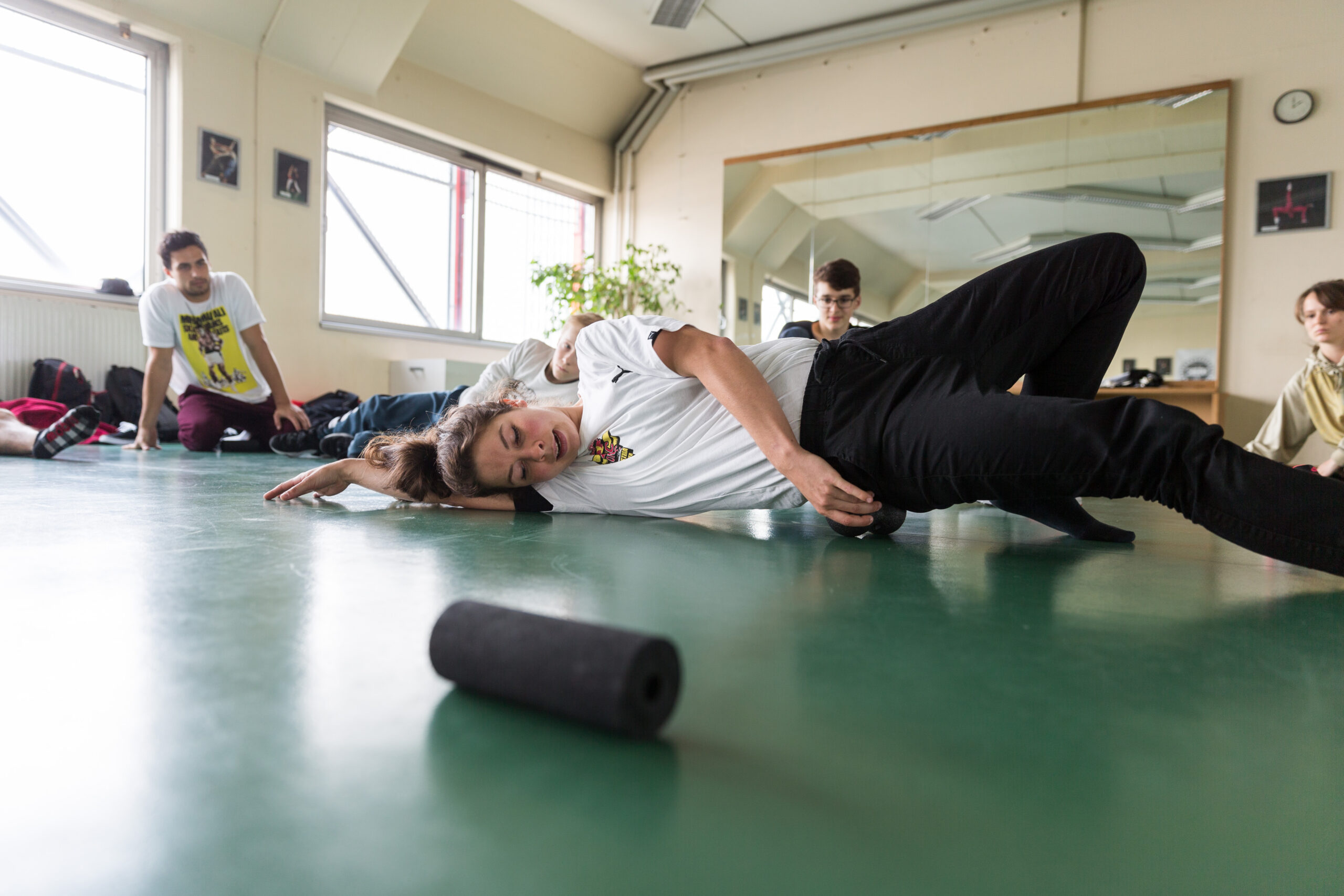
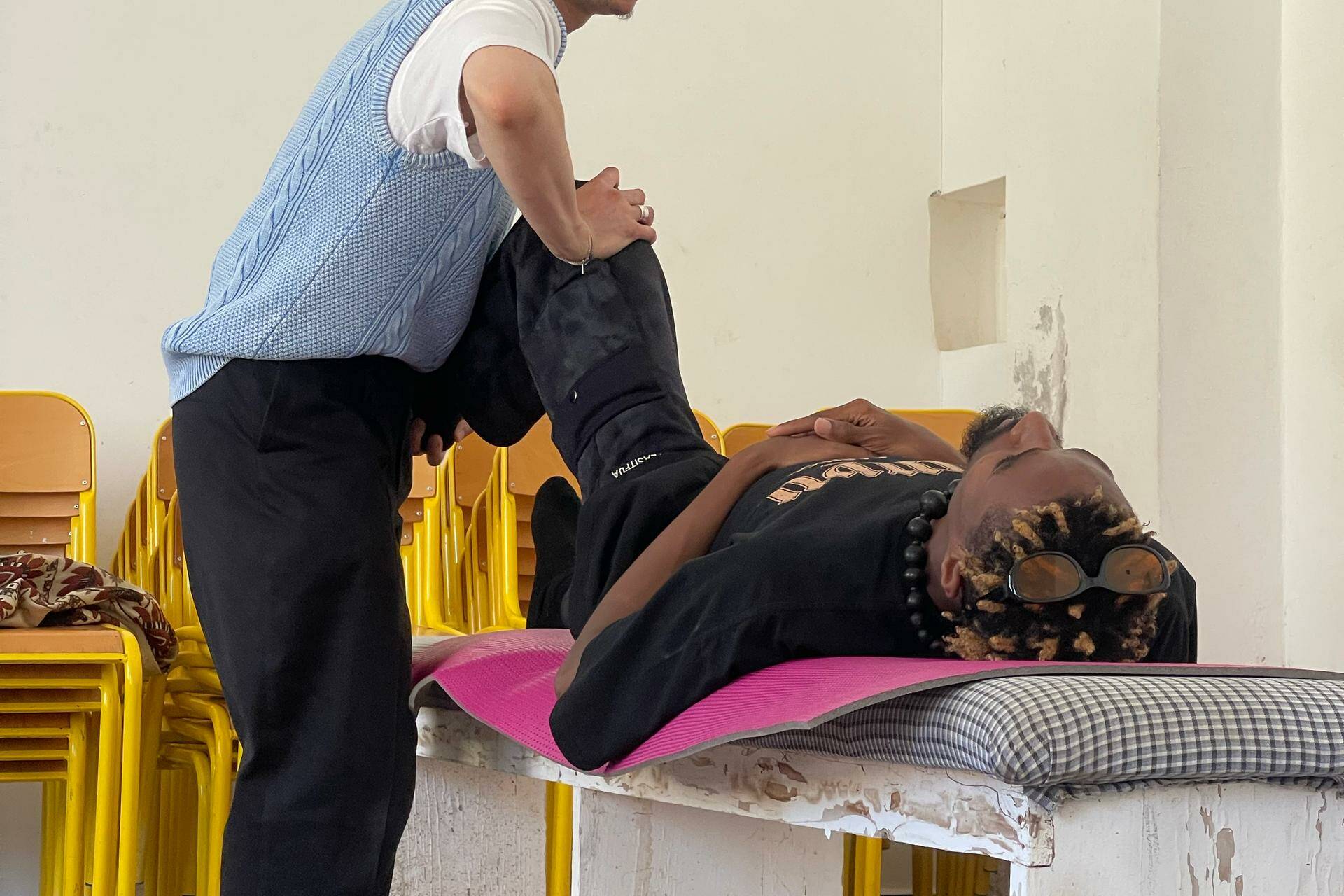
Roughly 10 hours are dedicated to breaking-specific training and roughly 10 hours to strength, conditioning, fitness and recovery.
This is a crucial insight. Top breakers are not just dancing more, they are investing heavily in non-breaking training to support performance, resilience and longevity.
At the same time, the remaining hours are often squeezed between work, travel and life obligations. This raises an important question: how well is this time actually structured?
Warm-Ups: Taken Seriously, But With Blind Spots
All observed athletes performed a warm-up. That is already a big step forward compared to older data on street dance training.
Warm-ups lasted on average 20 to 28 minutes and typically followed a similar pattern: mobility work, dynamic stretching and then breaking-specific movements such as toprock, footwork and freezes.
However, the study also reveals clear blind spots. Certain areas, especially toes, fingers and the neck, were consistently neglected. From a health and performance perspective, this is critical. These regions are heavily loaded in breaking, particularly under fatigue, yet rarely prepared or regenerated properly.
Warm-up quality is not just about duration, it is about relevance.
Breaking Sessions: Full-Out, Fatiguing and Self-Coached
Breaking-specific training is intense. Athletes regularly perform full-out rounds, cyphers, combo drills and battle simulations that closely mimic competition conditions.
New moves are typically learned through a process that will sound familiar to most breakers: slow it down, break it apart, repeat it, fail, adapt and repeat again. This trial-and-error approach is deeply rooted in breaking culture and it works.
What is striking, however, is this: all athletes organized their training themselves. There was no national coach, no overarching training system and no external load management.
Breaking remains largely autodidactic at the highest level.
Cool-Downs: The Weakest Link
If there is one area where structure consistently breaks down, it is the cool-down.
While athletes are aware of its importance, cool-downs were short, often just 5 to 10 minutes, or skipped entirely. Transitions from maximal intensity to stopping were abrupt and regeneration was frequently postponed to later or at home.
From an injury-prevention and performance perspective, this is a risky pattern. Not because dancers do not know better, but because fatigue, time pressure and culture often win over intention.
The Big Challenges Behind the Numbers
When looking at the overall picture, several key challenges become visible:
- High-intensity sessions with limited recovery margins
- Neglected warm up of certain body parts and missing cool-down routines
- Strong self-responsibility combined with little external guidance
- A growing gap between cultural training traditions and modern performance demands
Breaking has evolved faster than its training systems.
Why This Research Matters
This study does not tell breakers how they should train. It shows how they actually train, and that is exactly why it is so valuable.
Understanding real-world training patterns is the foundation for smarter training structures, better load management, lower injury risk and longer, more sustainable careers.
At HE4DS, this is where science meets practice. Not to replace breaking culture, but to support it with structure, education and long-term thinking.
Because in elite breaking today, talent is not enough.
How you train decides how long you last.
Want to go deeper into high-performance dance training?
Check out the HE4DS Education Program 2026!
**
Source: Lindner, S.M., Nonnenmann, J., Schott, N. et al. Analysis and systematization of the training structure of professional breakers. Ger J Exerc Sport Res 55, 373–382 (2025). https://doi.org/10.1007/s12662-024-00977-z